Top 10 Best Employee Wellness Programs in 2026: A Practical Guide for HR Leaders & CEOs
January 22, 2026


Financial well-being starts here
January 22, 2026
Employee burnout, disengagement, and rising healthcare costs are no longer abstract risks — they’re boardroom priorities. As organizations compete for top talent and sustainable growth, corporate wellness programs have evolved from optional perks into strategic investments tied directly to productivity, retention, and long-term performance.
In 2026, the most effective employee wellness programs go far beyond surface-level benefits. They address the realities of wellbeing in the workplace — including financial stress, mental health strain, physical exhaustion, and the growing need for flexibility — in ways that are practical, inclusive, and measurable.
This practical guide breaks down the Top 10 Best Employee Wellness Programs in 2026 that leading organizations are adopting to strengthen employee wellbeing, improve workplace wellness, and build resilient, high-performing teams.
Not all workplace wellness initiatives are created equal. In 2026, the most successful workplace wellness programs share a few defining characteristics. They address financial, mental, physical, and social well-being together holistically rather than in silos. They're accessible and stigma-free, ensuring support reaches employees across income levels, job roles, and life stages. And most importantly, they're measurable — clearly tied to outcomes like retention, engagement, absenteeism, and healthcare utilization.
Well-designed corporate wellness strategies align employee needs with business goals, making wellness a driver of performance rather than a standalone initiative.
Financial stress remains one of the most powerful and often invisible drivers of burnout, distraction, and disengagement at work. In 2026, high-performing organizations no longer treat money support as a “nice to have”; they position financial wellness as the foundation of their employee wellness programs because they recognize that stress about bills, debt, or retirement doesn’t stay at home; t shows up in productivity, absenteeism, and turnover.
Modern financial wellness programs go beyond one-off webinars. Leading employers now offer AI-powered budgeting and cash-flow tools, payroll-linked emergency savings, retirement readiness education, and confidential one-on-one financial coaching. For example, employees can see how small paycheck changes affect long-term goals, access support during unexpected expenses, or get guidance without fear of judgment. When employees feel more in control of their finances, they’re more focused, less anxious, and far more likely to stay engaged and loyal to their employer.
Related Reading: Understanding the Impact of Financial Stress on Employee Retention

According to the World Health Organization, an estimated twelve billion working days are lost globally each year to depression and anxiety—making mental health one of the biggest productivity risks facing employers. In 2026, mental health support has clearly shifted from reactive to preventive. The most effective workplace wellness programs focus on early intervention by offering ongoing access to therapy and counseling, digital mental health tools, stress-management resources, and training for managers to recognize and respond to early warning signs.
Rather than relying solely on crisis hotlines or annual awareness campaigns, leading organizations embed mental health support into everyday work culture. This includes flexible workloads, psychologically safe team practices, regular check-ins, and clear pathways to confidential care. When mental health conversations are normalized and support is easy to access, employees are more likely to seek help early, reducing burnout, absenteeism, and costly long-term disability claims while strengthening trust and engagement across the organization.
Flexibility is no longer a perk; it’s a core component of wellbeing in the workplace. In 2026, hybrid schedules, flexible working hours, compressed workweeks, and results-based performance models give employees greater control over when and how they work. Lifestyle wellness benefits, such as stipends for fitness, childcare support, home office setups, or personal development, help employees manage real-life responsibilities without compromising productivity.
Organizations that prioritize flexibility consistently see higher engagement, reduced burnout, and stronger trust between employees and leadership. By acknowledging that wellbeing looks different across life stages and geographies, companies also expand their talent pool and improve retention, proving that flexibility isn’t about doing less work, but about enabling people to do their best work sustainably.
Related Reading: 5 Ways to Increase Virtual Employee Engagement
According to the World Health Organization, for every $1 invested in preventive healthcare, employers can save $2–$5 in long-term medical and productivity costs. In 2026, leading organizations are shifting physical wellness away from surface-level perks toward prevention-first strategies that keep employees healthier for longer. This includes virtual primary care, ergonomic assessments for remote and on-site workers, subsidized preventive screenings, and proactive musculoskeletal support to address issues before they become chronic.
Rather than reacting to illness or injury, modern programs are designed to reduce risk early and consistently. Movement-friendly workdays, standing or adjustable desks, guided stretch breaks, and early access to care help employees maintain energy, avoid burnout-related fatigue, and stay productive. Over time, these programs lower healthcare claims, reduce injury-related absences, and support sustainable, long-term employee wellbeing.

Compensation confusion creates unnecessary stress even among high earners who may not fully understand how their pay, benefits, and incentives fit together. In 2026, transparent total compensation and rewards programs help employees clearly see the full value of what they earn, including base pay, bonuses, equity, retirement contributions, insurance, and wellness benefits. When compensation is easy to understand, employees are less likely to feel uncertain, undervalued, or skeptical about fairness.
Leading organizations use clear statements, digital dashboards, and plain-language explanations to make rewards tangible and accessible. This transparency builds trust, reduces pay-related anxiety, and encourages employees to engage more actively with benefits and wellness programs they might otherwise overlook. When people understand how they’re rewarded, they feel more confident, more appreciated, and more connected to the organization’s broader wellbeing strategy.
Related Reading: Audit Your Compensation & Rewards Strategy in 5 Minutes
According to Mckinsey, more than 60% of workers say economic and career uncertainty has caused them to rethink their long-term career plans. This uncertainty is a major—but often overlooked—driver of disengagement and burnout. In 2026, leading employee wellness programs recognize that wellbeing isn’t only physical or mental; it’s also about feeling secure, relevant, and confident about the future of one’s career.
High-performing organizations now embed learning, upskilling, and career progression directly into their wellbeing strategy. This includes access to continuous learning platforms, mentorship programs, internal mobility pathways, and clear conversations about growth opportunities. When employees can see how their skills evolve and where their careers can go, they feel more motivated, more resilient during change, and far more committed to staying and growing with the organization.
According to Investopedia, the rate of price increases for daycare in September 2025 was 1.5 times higher than the overall inflation rate. As childcare costs continue to outpace wages, many parents—particularly women—are making the difficult decision to reduce hours or leave the workforce altogether to manage caregiving responsibilities. This dynamic directly affects attendance, stress levels, and long-term workforce participation, turning family care into a critical workplace wellbeing issue rather than a private concern.
In 2026, inclusive workplace wellness strategies actively support working parents and caregivers through flexible scheduling, childcare subsidies or partnerships, backup care options, and access to eldercare resources. Leading employers recognize that predictable support reduces absenteeism, improves focus, and helps retain experienced talent during key life stages. Supporting families is no longer just compassionate—it’s a business imperative tied to workforce stability, gender equity, and long-term organizational performance.
Related Reading: How Startups and Small Teams Can Offer Top Rewards Without Big Budgets

Loneliness and disengagement remain persistent challenges in hybrid and distributed workplaces, where casual connection is no longer built into the workday. Without intentional effort, employees can feel isolated, overlooked, or disconnected from their teams and the organization’s mission—quietly eroding collaboration, morale, and retention.
In 2026, strong employee wellness programs actively invest in social wellbeing by creating spaces for connection and belonging. Employee resource groups (ERGs), purpose-driven volunteering initiatives, peer mentoring, and simple team rituals—like regular check-ins or shared celebrations—help rebuild human connection at work. When employees feel seen, included, and part of something meaningful, trust deepens, teamwork improves, and people are far more likely to stay engaged over the long term.
Many employees were never taught practical money skills—not in school, not at home, and often not at work. According to PWC, workplace financial education is strongly associated with lower financial stress and improvements in employee wellbeing and productivity. When people don’t understand budgeting, credit, saving, or investing, even a good salary can feel unstable and overwhelming.
In 2026, effective financial education programs focus on clarity, not complexity. Plain-language learning—delivered through short modules, real-life scenarios, and optional one-on-one guidance—helps employees make confident decisions without fear of judgment. By removing jargon and shame, education-based wellness programs build long-term financial confidence, encourage healthier habits, and create a workforce that feels more secure, focused, and empowered.
Related Reading: Financial Planning for Employees: How Companies Can Help People Achieve Their Goals
The best corporate wellness companies in 2026 focus on outcomes, not optics. Instead of counting sign-ups or launching feel-good initiatives, leading organizations track what actually moves the needle—engagement and utilization rates, absenteeism, turnover trends, productivity signals, and direct employee feedback. This data-driven approach allows leaders to continuously refine programs, scale what works, and retire benefits that don’t deliver real impact.
Wellness programs that are measured earn long-term executive buy-in and sustained funding because their value is clear. According to a 2024 report by Wellhub, companies see an average ROI of $2 for every $1 invested in wellness programs. When employees feel healthier, more supported, and less stressed, performance improves naturally—turning wellness from a cost center into a strategic advantage.

The best employee wellness programs in 2026 are holistic, inclusive, and measurable. They combine financial wellness, mental health support, flexibility, and career development to improve employee wellbeing and workplace wellness.
Corporate wellness programs help reduce burnout, improve productivity, and lower turnover. Employees who feel supported are more engaged, healthier, and more likely to stay with their employer long term.
Financial wellness programs consistently deliver strong ROI by reducing stress-related productivity losses and improving retention. Mental health and flexibility initiatives also perform well when adoption is high.
By addressing root causes of disengagement — financial stress, burnout, lack of flexibility, and career uncertainty — employee wellness programs create loyalty and reduce voluntary turnover.
No. Many modern wellness platforms are scalable and affordable, making them accessible to startups and small teams. Smaller organizations often see faster cultural impact.
Success can be measured through engagement rates, utilization data, employee surveys, absenteeism trends, and retention metrics. Tracking outcomes over time helps justify continued investment.
The most effective workplace wellness programs in 2026 are not about checking boxes or copying competitors. They are strategic systems designed to support real human needs while delivering measurable business results.
Organizations that invest in holistic, data-driven corporate wellness consistently outperform peers in engagement, retention, and resilience.
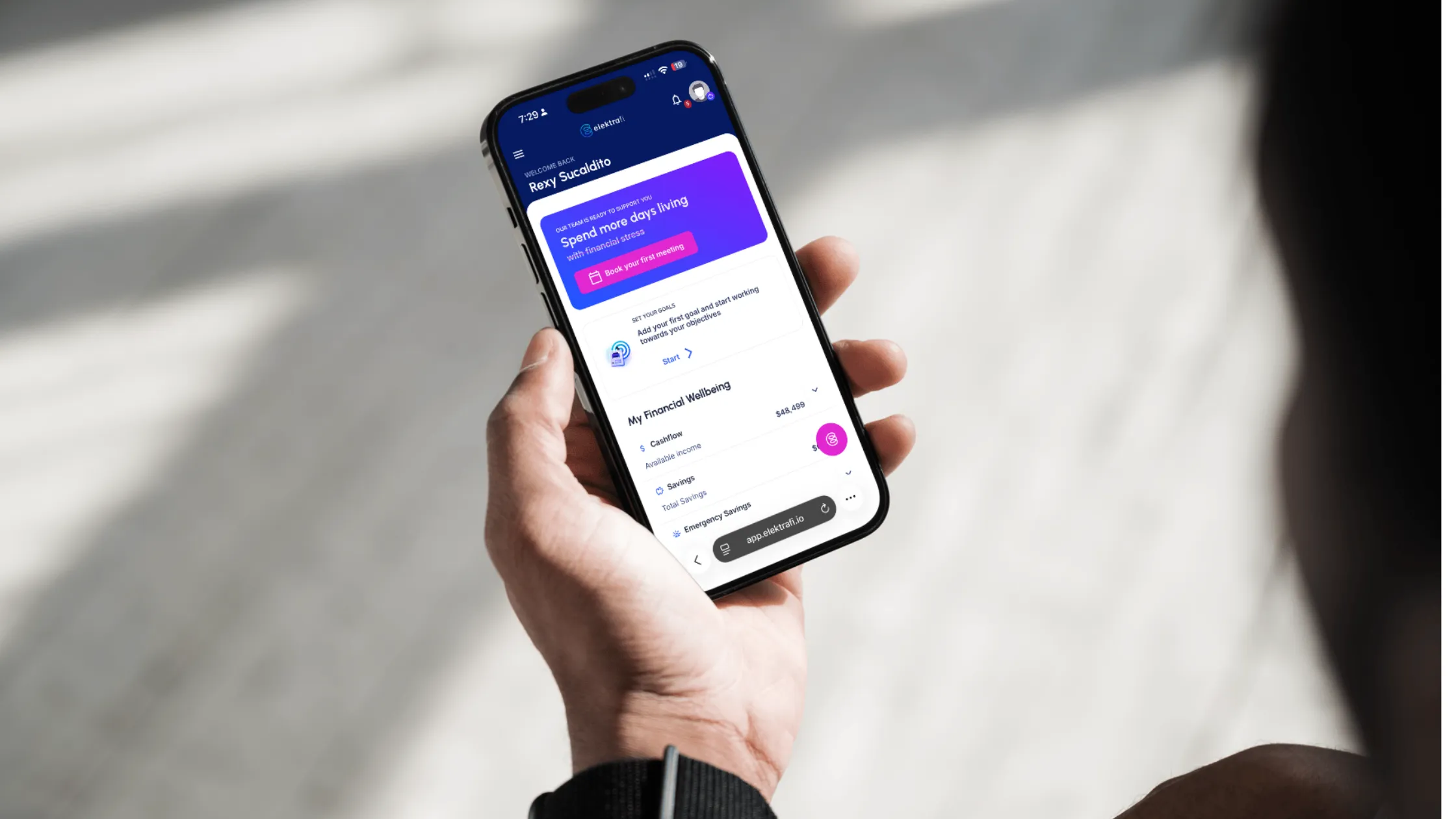
Whether you’re an HR leader designing your next wellness strategy or a CEO focused on retention and performance, ElektraFi helps you turn financial wellness into measurable impact. With AI-powered budgeting, financial education, and total rewards visibility, ElektraFi strengthens employee wellbeing without adding complexity. Contact ElektraFi today to learn more about our offers!
Higher salaries help, but they rarely eliminate financial stress. Learn why and discover employer financial wellness strategies that improve retention, productivity, and employee wellbeing.
Discover the most valued employee benefits in 2026, including financial wellness, flexible work, mental health support, PTO, healthcare, and career development. Learn what today's employees want and how employers can build benefits that improve retention and productivity.


